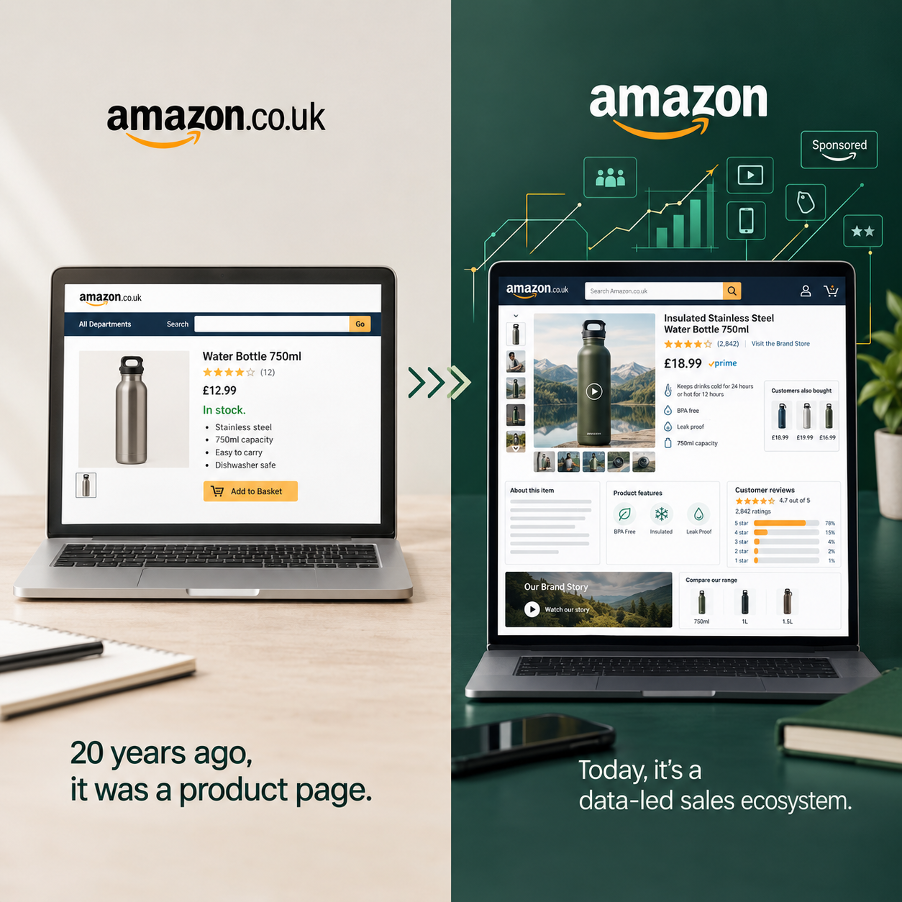
The Secrets of Amazon’s Search Algorithm: Proven Listing Techniques to Rank Higher and Sell More


Amazon is the world's largest online marketplace. With millions of products competing for attention, appearing high in search results can make a significant difference to your sales.
Although Amazon doesn't publicly disclose every detail of its search algorithm, 17VERDE's years of experience, Amazon documentation and marketplace data have revealed the main factors that influence rankings.
Understanding how Amazon's search algorithm works, and optimising your listings accordingly, is essential if you want to improve visibility, attract more traffic and increase sales.
Understanding Amazon's Search Algorithm
Amazon's search engine, commonly known as A9, and now supported by increasingly advanced machine learning systems, has one primary objective:
Show shoppers the products they are most likely to buy.
Unlike Google, which prioritises informational relevance, Amazon prioritises products that are most likely to convert into sales. Every ranking factor ultimately supports that goal while helping customers find products they'll be happy with.
The algorithm evaluates two broad areas:
Relevance Factors
These determine whether your product matches a shopper's search query.
Performance Factors
These measure how likely your listing is to generate a sale.
Products that perform well in both areas are far more likely to rank highly.
The Most Important Amazon Ranking Factors
1. Product Title Optimisation
Your product title is one of the strongest ranking signals on Amazon.
A well-written title should include:
Primary keyword
Brand name
Product type
Key features
Size, colour or variation details
Example
Instead of:
Water Bottle
Use:
HydraFlow Stainless Steel Water Bottle 1 Litre | Insulated Leak-Proof Sports Flask for Gym, Hiking & Travel
This gives Amazon clear keyword relevance while helping shoppers quickly understand the product.
Best practice
Do:
Include primary keywords naturally.
Keep the title easy to read.
Prioritise the customer experience.
Avoid:
Repeating the same keywords.
Using ALL CAPS.
Keyword stuffing.
2. Bullet Points That Convert
Bullet points influence both rankings and conversions.
Amazon uses them to understand your product, while shoppers use them to decide whether to buy.
A simple structure works well:
Feature → Benefit → Result
For example:
Double-wall vacuum insulation keeps drinks cold for up to 24 hours and hot for up to 12 hours.
BPA-free stainless steel provides safe, everyday use.
A leak-proof lid helps prevent spills in gym bags and backpacks.
Focus on solving customer problems rather than simply listing specifications.
3. Backend Search Terms
Amazon provides hidden keyword fields within Seller Central.
These keywords:
Help your product get indexed.
Don't appear on the public listing.
Expand your search visibility.
Use backend search terms for:
Alternative spellings
Synonyms
Long-tail keywords
Abbreviations
Foreign language searches
Avoid using:
Competitor brand names
Keywords already used in your title
Irrelevant phrases
4. Product Descriptions and A+ Content
A well-written product description can improve conversion rates, which in turn can improve rankings over time.
Effective descriptions should:
Address customer pain points.
Highlight key benefits.
Build trust.
Reinforce the value of the product.
If you're Brand Registered, A+ Content can further improve engagement through:
Enhanced imagery
Comparison charts
Brand storytelling
Detailed feature explanations
Higher conversion rates generally lead to stronger ranking performance over time.
5. Product Images
Images are often one of the biggest factors influencing purchase decisions.
High-performing listings usually include:
Main image
Pure white background
High resolution
Product fills at least 85% of the frame
Additional images
Lifestyle photography
Feature highlights
Size guides
Infographics
Comparison images
Many shoppers decide whether to click and buy before reading the product description.
Sales Velocity: Amazon's Strongest Ranking Signal
Consistent sales are one of the most influential ranking factors on Amazon.
Strong sales tell Amazon that shoppers prefer your product.
Why sales velocity matters
If Product A sells:
5 units per day
and Product B sells:
50 units per day
Amazon is far more likely to rank Product B above Product A.
Ways to increase sales velocity
PPC campaigns
Promotional discounts
Coupons
External traffic
Influencer marketing
Social media advertising
More sales often lead to better rankings, which can generate even more sales over time.
Reviews and Ratings
Customer reviews are among Amazon's strongest trust signals.
Products with:
Higher ratings
More reviews
Consistent positive feedback
typically convert better than products with limited or poor reviews.
Good targets
Minimum rating: 4.3 stars
Preferred rating: 4.5 stars or above
A steady flow of new reviews
Ways to generate more reviews
Deliver a high-quality product.
Package products well.
Use Amazon's "Request a Review" feature.
Provide excellent customer support.
Never attempt to manipulate reviews or breach Amazon's review policies.
Amazon PPC and Organic Rankings
Many sellers treat paid advertising and organic rankings as separate strategies.
Amazon doesn't.
How PPC supports SEO
Advertising generates valuable performance data, including:
Sales history
Click-through rate
Conversion rate
These signals help Amazon assess whether your product deserves higher organic rankings.
Keyword launch strategy
Identify relevant keywords.
Run Sponsored Products campaigns.
Monitor converting search terms.
Add high-performing keywords to your listing.
Gradually improve organic rankings.
Successful sellers often use PPC to accelerate organic growth.
Click-Through Rate (CTR)
If shoppers regularly see your listing but don't click it, your rankings can decline.
Improve click-through rate by focusing on:
Better main images
Use professional photography that stands out in search results.
Competitive pricing
Many shoppers compare prices before clicking.
Strong titles
Clearly communicate the value of your product.
Promotions
Coupons and discounts can increase both visibility and clicks.
Conversion Rate Optimisation
Amazon rewards products that consistently turn visitors into buyers.
Improve conversion rates by:
Using high-quality images
Writing persuasive product copy
Building review volume
Creating compelling A+ Content
Remaining competitively priced
Offering fast delivery
Even small improvements in conversion rate can have a noticeable impact on rankings.
Building a Winning Keyword Strategy
The best Amazon sellers focus on keywords with strong buying intent.
Broad keyword
Water bottle
High-intent keyword
Stainless steel insulated water bottle 1 litre
Long-tail keywords are often:
Less competitive
Easier to rank for
More likely to convert
Popular keyword research tools
Helium 10
Jungle Scout
Data Dive
MerchantWords
Amazon Brand Analytics
Build your listings around the words your customers actually search for.
Common Amazon SEO Mistakes
Avoid these common issues;
Keyword stuffing
Overusing keywords makes listings harder to read and can reduce conversions.
Ignoring images
Poor product photography can limit performance, even if your keyword optimisation is strong.
Weak product launches
Without early traffic and sales, it can be difficult to gain momentum.
Neglecting reviews
Trust plays a major role in conversion.
Chasing rankings instead of sales
Higher rankings are usually the result of strong sales performance, not the other way around.
The Amazon Ranking Formula
While every category is different, successful listings often have the following in common:
Keyword research + Optimised title + Persuasive bullet points + High-quality images + A+ Content + Strong review profile + Competitive pricing + Amazon PPC + High conversion rates = Better search rankings
Final Thoughts
There isn't a secret shortcut to ranking well on Amazon. Amazon consistently rewards products that are relevant to customer searches and likely to generate sales.
Sellers who invest in keyword optimisation, strong product listings, excellent customer experience and consistent sales growth are far more likely to achieve lasting improvements in visibility.
Rather than trying to outsmart the algorithm, focus on creating a listing that helps shoppers make confident buying decisions. When customers click, buy and leave positive reviews, Amazon recognises those signals and is more likely to reward your product with greater visibility and stronger long-term performance.